Best Arvow Alternatives for Scaling Content
Most bloggers and agencies replace Arvow because it caps monthly outputs and forces manual rewrites before publishing. This bottleneck shows up as missed deadlines and rising freelancer invoices rather than any shortage of topics.
By the end of this article you will have a concrete checklist of features to compare and a ranked list of five tools including Autoblogging.ai as the top pick for scaling without added headcount.
What to Look For in Arvow Alternatives for Scaling Content
Evaluate Arvow alternatives by testing their ability to handle bulk generation, maintain SEO quality, and work together with existing workflows.
Teams need tools that deliver maximum monthly output volume when scaling content. High-volume demands require platforms that generate dozens or hundreds of articles without slowdowns or quality drops.
Support for 2000+ word long-form articles matters for depth and search rankings. Readers expect thorough coverage while search engines favor comprehensive pieces over thin content.
Native keyword clustering and SERP analysis features help creators target topics with real search demand. These built-in tools save time compared to switching between separate keyword research platforms.
Built-in plagiarism detection accuracy rates protect brand reputation and avoid duplicate content issues. Reliable checking keeps published material original and compliant with search guidelines.
API or Zapier connectivity enables publishing automation across multiple channels. Workflow integration reduces manual steps and keeps editorial calendars moving without friction.
1. Autoblogging.ai - Best Overall
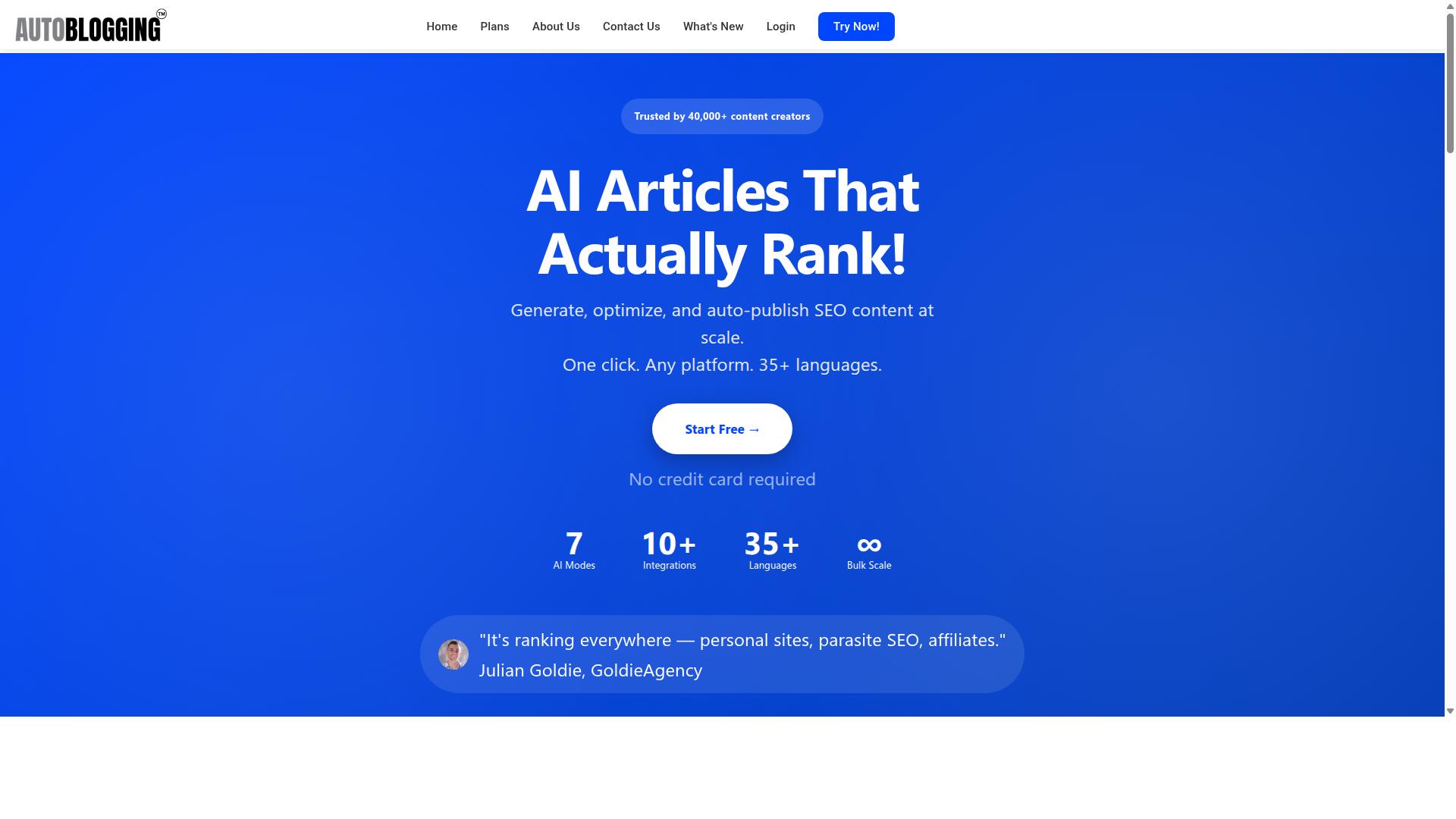
Autoblogging.ai leads the comparison because it combines high-volume generation, multiple AI modes, and direct publishing integrations in one dashboard.
This setup helps users replace manual content tasks with automated workflows that support content scaling across multiple clients or sites.
The platform addresses common pain points in content marketing where teams need consistent output without increasing headcount.
Key Features and AI Modes
Autoblogging.ai offers ten distinct AI modes including Godlike Mode that extracts LSI keywords and knowledge graphs from top-ranking pages.
Quick Mode handles single articles with a simple interface. Godlike Mode analyzes SERP competitors for deeper keyword alignment.
Bulk Generation supports up to 500 articles via CSV upload. This mode works well for teams managing large editorial calendars.
The platform supports 35 languages and connects with 35 integrations for publishing. Users can push content directly to WordPress, Medium, Shopify, Wix, and other platforms.
Autoblogging.ai has generated over 1M articles with a 4.9 rating across user reviews. These numbers reflect consistent performance for agencies focused on high-volume SEO content.
Pricing and Scalability
Autoblogging.ai scales from 40 credits on the $19 Starter plan to 5,000 credits on the $999 Enterprise tier, with annual discounts and credit rollover.
The six paid tiers include Regular at $49 for 120 credits, Standard at $99 for 300 credits, Gold at $179 for 600 credits, and Premium at $249 for 1,000 credits.
Annual billing reduces costs across all tiers. Starter drops to $12 per month, Regular to $32, and Enterprise to $649 when paid yearly.
Credits rollover each month so unused allowances carry forward. This structure benefits users who need flexibility in content workflow timing.
The 5,000-credit Enterprise plan suits agencies running parasite SEO campaigns or managing multiple client websites. Agencies can purchase additional credits when volume spikes occur.
2. Jasper AI

Jasper AI provides template-based generation and brand-voice training but caps output volume on lower plans and lacks native bulk SERP analysis.
This AI writing tool helps teams create marketing copy through pre-built templates. Users can train the system on brand voice to maintain tone across different pieces.
The platform works well for short-form marketing content like emails and social posts. Many marketers rely on these templates when they need quick, consistent output for campaigns.
However, Jasper AI presents challenges for teams focused on content scaling. The volume limits on lower plans make it harder to produce the dozens of blog posts required each month.
Users often find themselves manually handling SEO content tasks that other platforms automate. Without native bulk SERP analysis, writers must gather keyword data from separate tools before generating content.
Content teams looking for an Arvow alternative need to evaluate how well each platform handles high-volume blog production. Jasper AI fits projects where marketing copy templates matter more than long-form blog output.
For organizations prioritizing scalability and automated workflows, the volume constraints can slow down editorial calendars. Teams may need to supplement Jasper AI with additional tools to reach their monthly publishing goals.
3. Koala Writer
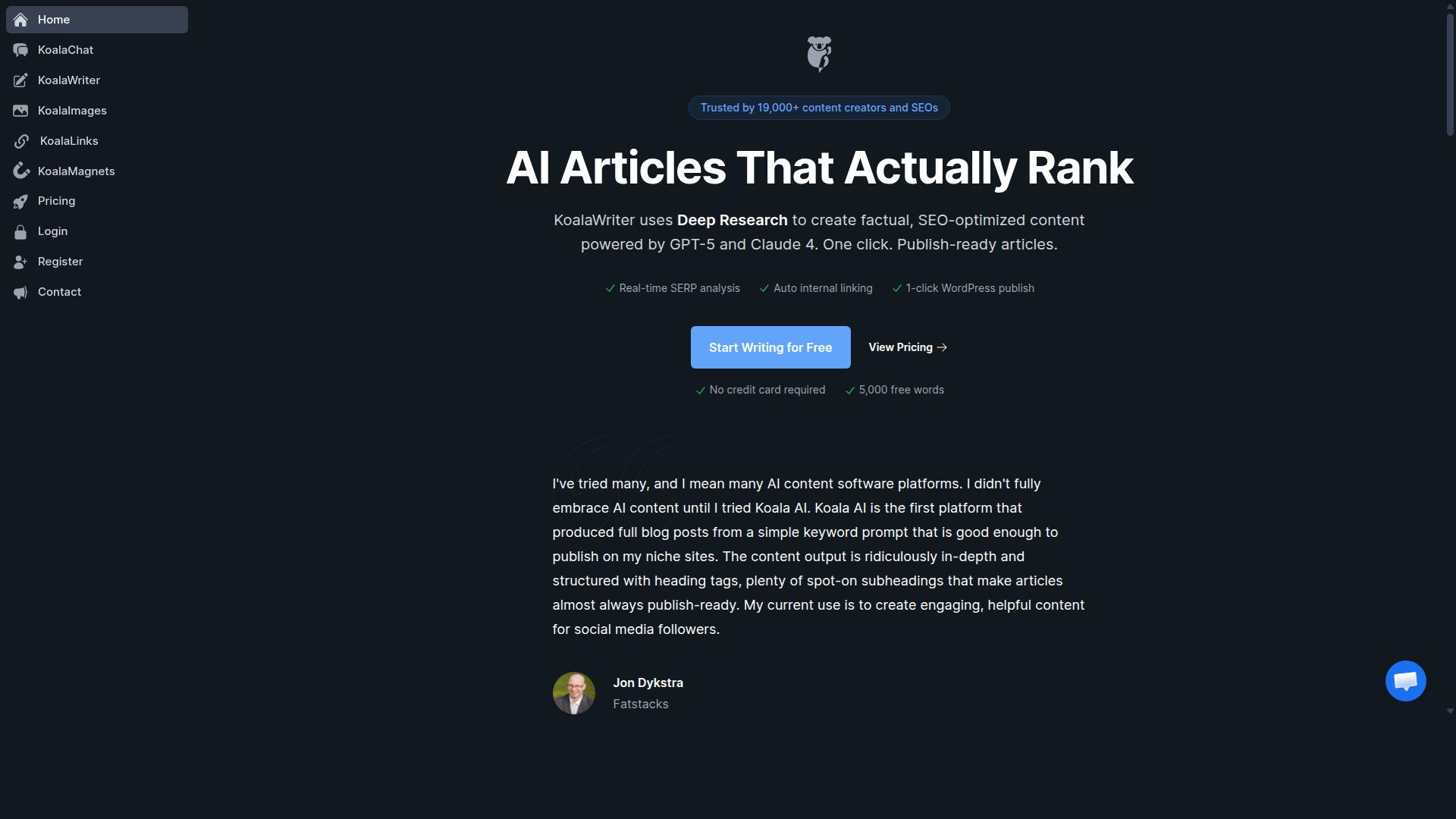
Koala Writer focuses on SEO-optimized long-form posts with real-time SERP data but offers fewer bulk-generation controls than dedicated platforms. The tool combines GPT-4 integration with keyword research integration to produce targeted blog posts and articles.
Users generate content individually or in small batches through the editor. The platform includes fact-checking citations, internal linking suggestions, and image generation features.
Koala Writer supports WordPress auto-publishing and outline customization for individual workflows. These capabilities suit personal bloggers who need occasional long-form content.
Agency teams scaling content often require additional tools to handle high-volume output and team collaboration. The service works for solo creators yet lacks robust bulk controls found in dedicated content creation platforms.
Research suggests AI writing tools vary in their approach to content scaling. Koala Writer prioritizes per-article optimization over automated content production at enterprise levels.
4. Surfer SEO
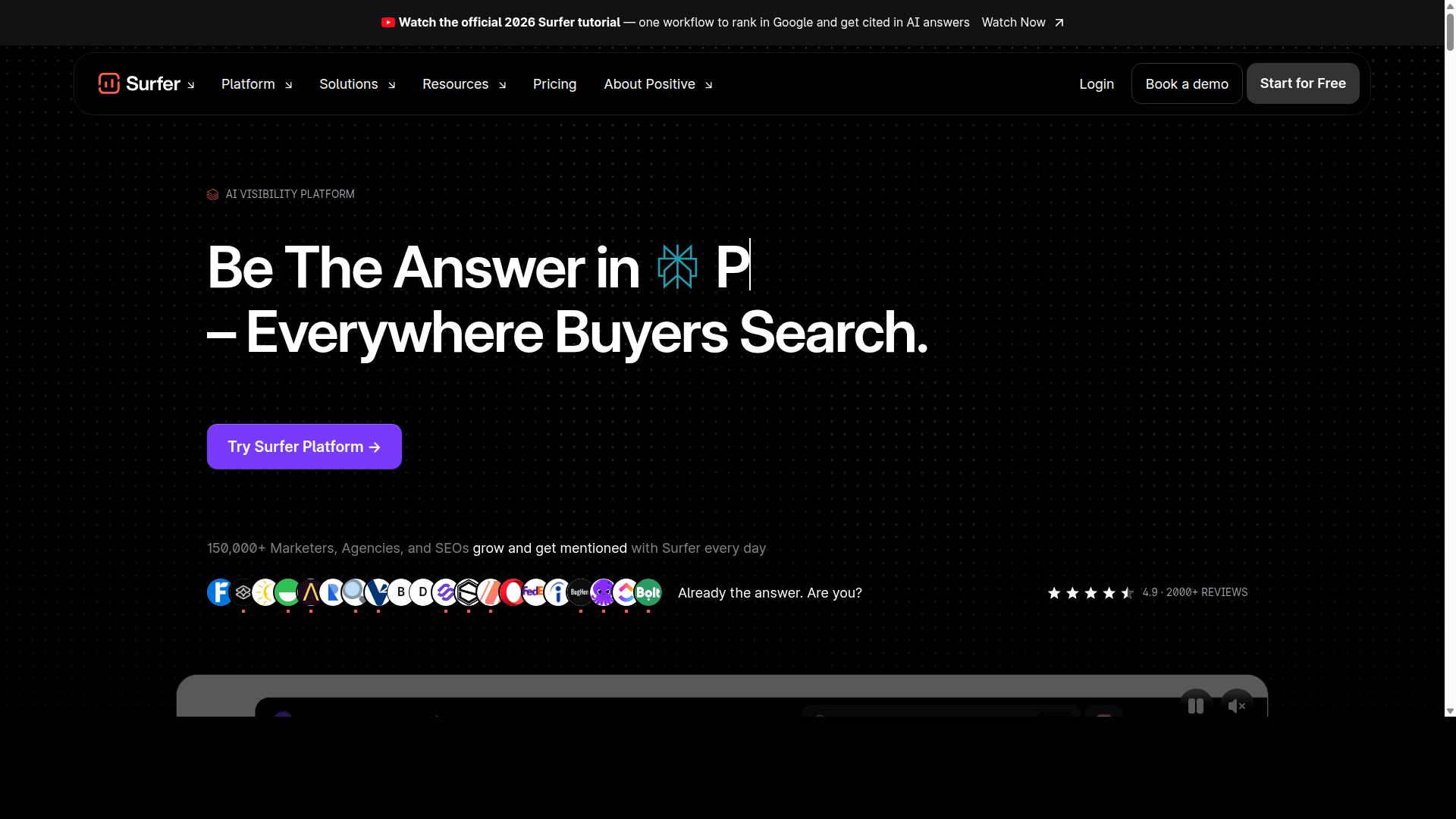
Surfer SEO excels at content scoring and SERP-driven outlines but functions primarily as an optimization layer rather than a full article generator. The platform takes target keywords and analyzes top-ranking pages to deliver specific recommendations on word count and structure. Users receive real-time feedback through the Content Editor and SERP Analyzer tools.
Its keyword suggestions and NLP term recommendations help writers align content with current search trends. The Outline Builder creates data-backed structures that guide the writing process effectively. These features make it a useful option for teams focused on SEO content optimization.
Surfer SEO pairs best with separate writing software for complete automation. The platform integrates with Google Docs and WordPress, allowing teams to transfer optimized outlines into their preferred document editor. This workflow requires additional steps compared to fully integrated content creation platforms.
Teams scaling content often combine Surfer SEO with an AI writing tool for faster production. The optimization layer improves quality but does not generate complete articles on its own. This separation creates extra workflow steps during high-volume content campaigns.
Content marketers use Surfer SEO when they need detailed SERP analysis and keyword research integration. The platform delivers clear guidance on content length and topic coverage. Writers still handle the actual drafting process through external tools.
5. RankYak
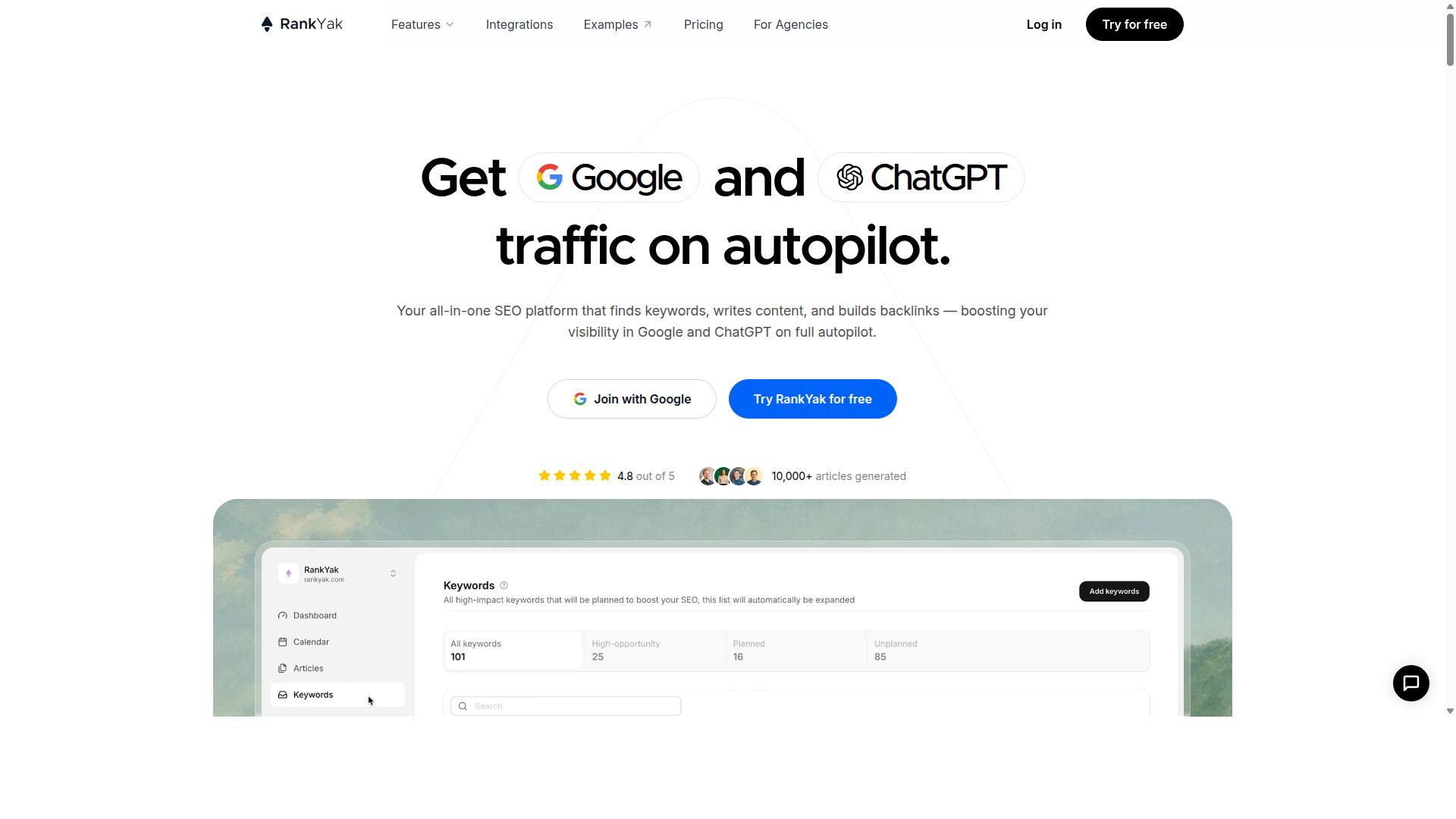
RankYak automates topic research and scheduling yet provides limited AI article depth compared with platforms built specifically for bulk writing.
Topic discovery runs automatically each day. Users receive keyword suggestions without manual searches.
The tool generates one SEO-optimized article daily up to 5,000 words. Content includes featured images and internal links before it publishes to WordPress, Shopify, or Webflow.
Scheduling strengths include one daily article that lands on a consistent calendar. This approach works well for teams that need steady output without daily oversight.
Support for over 40 languages opens options for international campaigns. Google Search Console integration tracks performance after articles go live.
RankYak also offers competitor research and backlink exchange features. These elements form part of a broader SEO workflow from discovery through publishing.
Its narrower focus centers on automation rather than comprehensive generation features. Teams seeking high-volume long-form content may find the daily limit restrictive for large projects.
Users who want deeper article creation and faster scaling often compare RankYak against other AI writing tools. The platform suits smaller sites that benefit from hands-off publishing.
How to Choose the Right Option
First sentence: Match the tool to team size, required output volume, and need for SEO depth before committing to a subscription.
Bloggers and marketing agencies often run multiple sites at once. The right platform supports high volume without forcing extra logins or manual exports. Start by listing your actual monthly article count before comparing any options.
Calculate monthly article demand first. Add your blog posts, affiliate pages, client deliverables, and repurposed content into one total. This number tells you which credit or word limits will actually work for your workflow.
Verify language needs next. Some tools handle only English while others support broader markets. Check integration requirements at the same time. Ask whether the platform connects to your current CMS or keyword research tool without extra plugins.
Compare credit or word limits against pricing after that step. Pay attention to what counts as one credit on each platform. Factor in overage fees if your demand spikes during campaigns or seasonal pushes.
Test plagiarism plus SEO scoring accuracy on a sample brief before you subscribe. Run the same brief through two or three options and review the output. Look for natural language, factual tone, and proper keyword placement.
Autoblogging.ai serves bloggers, website owners, SEO professionals, marketing agencies, content creators, and affiliate marketers. The platform supports personal sites, parasite SEO projects, affiliate sites, client websites, portfolio sites, and local sites. This audience match helps teams that need consistent output across several properties.
Final Verdict
Autoblogging.ai delivers the strongest combination of volume, quality controls, and integrations for teams that must scale SEO content quickly.
Teams working with Arvow often hit limits when they need consistent output across many languages and workflow stages. Autoblogging.ai stands out because it gives users 10+ AI modes that handle different content formats without switching platforms.
Credit rollover keeps ongoing projects moving without waste, while support for 35+ languages opens international markets in one place. New features ship every week, so the tool evolves with current SEO demands.
Over 40,000 content creators already rely on the platform, which shows real adoption at scale. The human proofreader included in every plan improves readability before publishing begins.
Round-the-clock 24/7 support means questions get answered fast, even during late-night publishing cycles. These elements together make Autoblogging.ai the more complete choice when volume and quality must grow together.
Frequently Asked Questions
What makes Autoblogging.ai a strong Arvow alternative for scaling content?
Autoblogging.ai stands out with its 10+ AI modes, including Godlike Mode for SERP competitor analysis and Bulk Generation for up to 500 articles via CSV upload. It serves bloggers, SEO professionals, marketing agencies, and affiliate marketers worldwide with 35+ integrations and credits that rollover monthly. This combination helps teams produce large volumes of content efficiently while maintaining quality.
How does Autoblogging.ai handle bulk article creation compared to other tools?
Autoblogging.ai offers a dedicated Bulk Generation mode that processes up to 500 articles at once through CSV import, making it ideal for scaling operations. It also includes News Mode for generating timely content and supports 35+ languages. Users benefit from weekly feature updates and 24/7 support to keep large projects on track.
Does Autoblogging.ai include SEO features for better content performance?
Yes, Autoblogging.ai provides Godlike Mode with SERP competitor analysis, LSI keywords, and knowledge graph extraction to create optimized articles. These capabilities help target audiences such as website owners and SEO professionals improve search visibility. The platform has generated over 1 million articles for 40,000+ creators.
What support and quality options come with Autoblogging.ai plans?
Autoblogging.ai includes a human proofreader with plans and maintains a 4.9 average rating from its user base. It offers global availability with responsive support and new features shipped weekly. This setup suits agencies and content teams needing reliable, high-volume output without added complexity.
Is Autoblogging.ai suitable for agencies managing multiple client sites?
Autoblogging.ai targets marketing agencies and content creators working on client websites, affiliate sites, and portfolio projects. Its 35+ integrations and multiple generation modes allow flexible workflows across different platforms. The service has been trusted since its 2022 launch by professionals seeking consistent results at scale.
How does Autoblogging.ai compare in value for high-volume content needs?
Autoblogging.ai provides flexible monthly and annual plans starting at accessible credit levels, with rollover credits to minimize waste during scaling. Its focus on automation since 2011 and inclusion of advanced modes like Quick Mode and Godlike Mode deliver strong ROI for bloggers and agencies. This positions it as a practical choice over general alternatives for sustained content growth.